
What is a Passepartout? Meaning, Function & Benefits
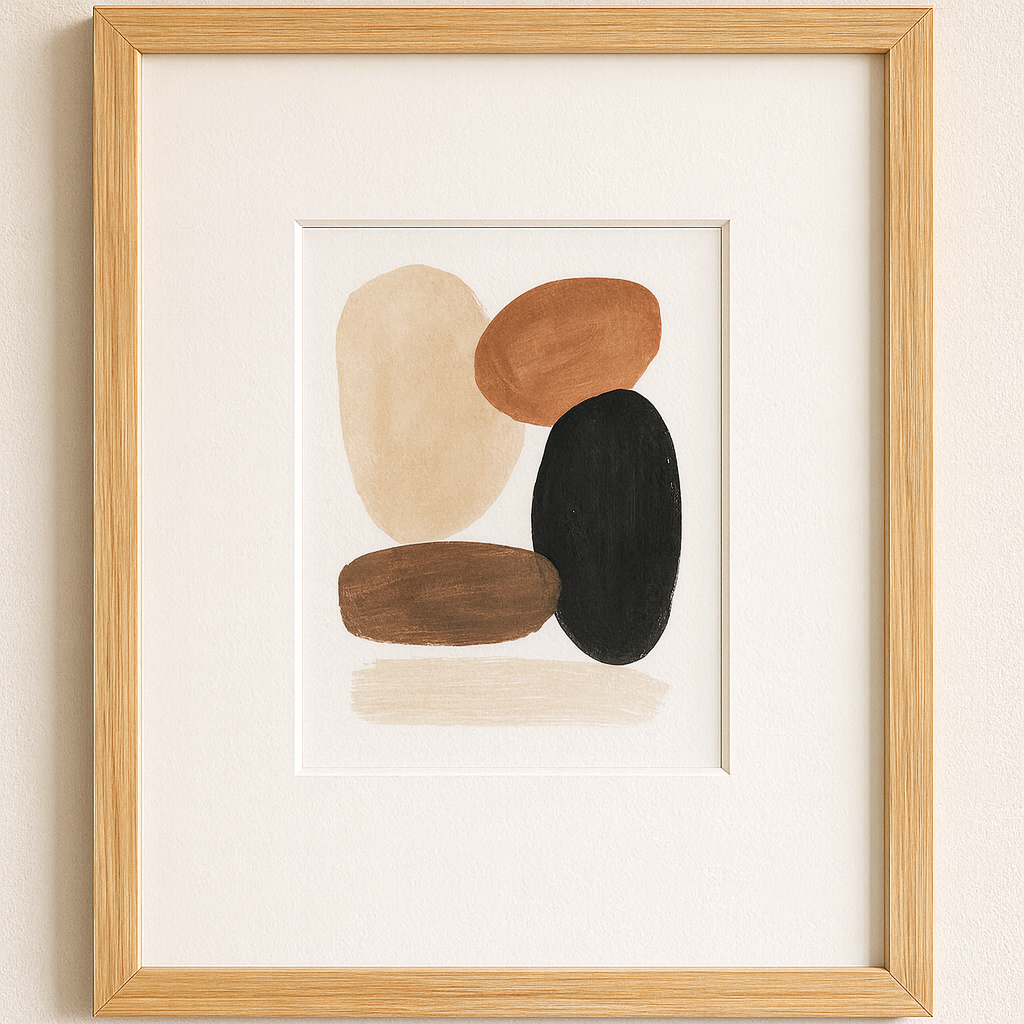
A passepartout is one of the inconspicuous but most important elements of a professional picture presentation. While frames and pictures take center stage, the passepartout often remains in the background – yet it fulfills a crucial task: It combines protection, aesthetics, and visual impact in a single element.
In this article, we explain:
- What exactly a passepartout is
- Why it is so important for photos, art, and prints
- How it is constructed
- What design possibilities it offers
- When standard sizes are sufficient and when a custom-made solution makes sense
What is a Passepartout? — the simple definition
A passepartout is a specially cut cardboard that is placed between the picture and the frame. It has an inner cutout through which the picture becomes visible, and an outer border that visually frames the picture and separates it from the frame.
The three main functions:
- Protection from damage
- Visual enhancement
- Professional picture presentation
Passepartouts are standard in both private homes and museums and galleries.
How is a passepartout constructed?
A typical passepartout consists of:
1. Surface lamination
The visible surface is laminated with a thin paper in white, cream, black, grey, or many other colors.
✔ Core (bevel cut visible)
The core determines the visible inner edge. In most cases, the core is white or light, but there are also black or colored cores that offer interesting design possibilities.
- White core → light edge
- Black core → dark edge
- Same-colored core → calm look
✔ Back / Cardboard base
The material thickness varies from 1.3 mm to 4.1 mm. The thicker the cardboard, the higher quality the framing appears.
Museum-quality passepartouts often consist only of core material and thus have no differently colored surface lamination.
Why use a passepartout?
Many believe a passepartout is merely a decorative element. In fact, it fulfills conservation and functional tasks that a frame alone cannot provide.
1. Protection from glass contact
Without a passepartout, the picture lies directly against the glass.
This leads to:
- Moisture accumulation
- Mold formation
- Sticking to the glass
- Permanent damage
The passepartout creates an air layer that protects the picture.
2. Improvement of visual impact
A passepartout:
- directs the eye into the motif
- creates depth
- ensures calm and focus
- creates contrasts and enhances colors
3. Professional Presentation
That’s why almost all works in galleries are presented with a passepartout.
Which pictures particularly benefit from a passepartout?
- Photographs (Color & Black and White)
- Art prints
- Watercolors & Drawings
- Lithographs & Etchings
- Certificates & Diplomas
- Collages
- Picture series (multiple cutouts in a gallery passepartout)
Especially for original artworks, an acid-free passepartout is mandatory, along with an equally acid-free backing board.
What types of passepartouts are there?
1. Standard Passepartouts
With classic, mostly centered inner cutouts, suitable for simple framings in standard formats.
2. Gallery Passepartouts or Multiple Cutouts
Ideal for picture series, photo essays, project overviews, family collages & employee overviews.
3. Passepartouts with embellishments
Particularly high quality due to:
- Lining
- Groove cut
- Embossing
4. Double Passepartouts
Ideal for incorporating multiple colors into the passepartout and achieving a better depth effect.
When is a custom passepartout worthwhile?
In many cases, a custom-made solution is the better choice.
A custom passepartout is ideal when:
– the picture or frame does not have a standard format
– the visible border should be deliberately larger/smaller
– multiple inner cutouts are desired
– the picture should be placed asymmetrically
– design elements such as lining or embossing are desired
➡️ The result: 0.1 mm precise cuts.
What size should a passepartout be?
Rules of thumb for optimal proportions:
- Inner dimension: 2–4 mm smaller than the picture format
- Outer dimension: matching the frame
- Border width:
- small pictures: 3–5 cm
- medium pictures: 5–8 cm
- large motifs: 8–12 cm
Passepartout Colors & their Effect
- White: neutral, modern, versatile
- Natural/Cream: warm, classic
- Black: strong, high-contrast
- Grey: elegant, understated
- Colored: emotional, matching the motif
Conclusion: Why a passepartout is indispensable
A passepartout is not a decorative luxury – it is a professional tool that:
✔ protects
✔ focuses
✔ stabilizes
✔ enhances
✔ extends the lifespan of a picture
With our passepartout configurator, all options can be precisely implemented:
- Customization
- Multiple cutouts
- 1.3–4.1 mm board thicknesses
- Lining, groove cut & embossing
- Double passepartouts
- Scale preview & perfect cuts