
Picture Mounting – How to Properly Secure a Picture in a Frame?
A picture has been selected, the passe-partout and frame have been delivered – what now? Inserting and securing it sounds simple, but it holds a few pitfalls. Doing it correctly protects your picture long-term, ensures it sits neatly in the frame without slipping, and thus creates an appealing presentation.
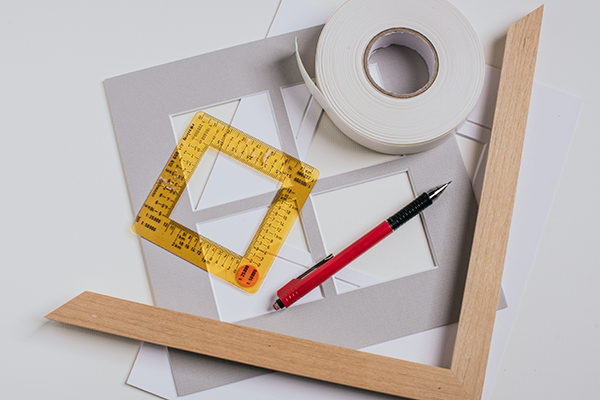
What goes into a frame?
Before we get to securing, let’s look at the typical structure of a framed picture – from front to back:
- Acrylic glass / Glass – protects the picture from dust, dirt, and touch
- Passe-partout – frames the picture and keeps it at a distance from the glass
- Picture – attached to the backing board or passe-partout
- Backing board – cardboard or hardboard as a stable finish
All layers lie in the rebate of the frame and are held together by the backing board.
Note: The following steps refer to classic picture frames. Clip frames operate on a different principle and are treated separately.
Step by Step to Picture Mounting: Inserting the Picture
1. Clean the frame Before you begin, wipe the inside of the acrylic glass with a lint-free, anti-static cloth. Acrylic glass easily builds up static electricity and attracts dust – a quick wipe just before insertion is therefore particularly important.
2. Insert the acrylic glass Carefully place the acrylic glass into the rebate. Make sure it lies flat and is not crooked. Only remove the protective film shortly before insertion – from both sides, if present.
3. Insert the passe-partout If you are using a passe-partout, it goes directly on top of the acrylic glass. The opening should frame the picture evenly. Check the position carefully before proceeding.
4. Attach the picture to the backing board The picture is not inserted loosely, but fixed to the backing board – this ensures it sits securely and does not slip. How to do this best is described in the next section.
5. Insert the backing board The equipped backing board closes the frame and holds all layers together. It should sit firmly, but not press so hard that the acrylic glass is put under tension.
Attaching the picture to the backing board
To ensure the picture sits reliably on the backing board and does not shift, there are several proven methods – depending on the value and sensitivity of the artwork:
Photo corners The picture is slid into small paper or plastic corners that are attached to the backing board. Fully reversible and ideal for photos or prints that may be removed later.
Archival tape Acid-free, archival-grade tape gently secures the picture to the backing board – usually along the top edge, so it hangs neatly. A reliable and straightforward solution for most applications.
Self-adhesive backing board A practical alternative: backing boards with a self-adhesive surface, onto which the picture is directly positioned and fixed. This creates a clean, flat connection – especially useful if the artwork should lie flat and not ripple.
Wheat starch and methyl cellulose For particularly sensitive or rare specimens – such as historical graphics, old photographs, or valuable originals – natural adhesives like wheat starch or methyl cellulose are used in conservation framing. Both are fully reversible, acid-free, and protect the material long-term. They are the standard when the utmost care is required.
Important: For valuable pictures, use only acid-free, archival-grade materials. Ordinary tape can yellow over time and permanently damage the paper. Never tape directly onto the front of an original.
Securing the backing board: Flexipoints
The frame is then closed over the backing board. To close the frame, we rely on Flexipoints – small, flexible metal tabs that are pressed flat into the frame with a special insertion tool, securely fixing the backing board. They lie flat, do not damage the frame, and can be removed if necessary – ideal for clean, professional framing.
Common Mistakes and How to Avoid Them
Dust under the acrylic glass Acrylic glass is statically charged and magnetically attracts dust. Work quickly and wipe again just before closing. Once trapped, dust is annoying.
Acrylic glass directly touching the picture Without a passe-partout, the picture lies directly against the acrylic glass. Temperature fluctuations can cause moisture, which can warp the paper or promote mold. A thin passe-partout or a spacer can help here.
Wrong frame size If the picture is too small for the frame, even good securing will only help to a limited extent. In this case, a custom-cut passe-partout ensures everything sits neatly.
Conclusion
Proper picture mounting is not rocket science, but it’s worth consciously going through each step. Cleanliness, the right materials, and careful fixation ensure that your picture looks good long-term – and remains protected.