
Acrylic glass for picture frames
UV protection, safety, and brilliant image display
Acrylic glass is the modern alternative to traditional float glass. It is lighter, more shatter-resistant, and available with high UV protection, anti-reflection, or scratch-resistant surface depending on the version. But which acrylic glass is right for which project?
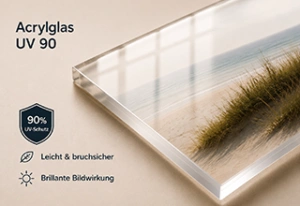
Acrylic glass
UV 90
Ideal for large frames, living spaces
and standard applications.
✓ 90% UV protection
✓ Lightweight & shatter-resistant
✓ Clear, brilliant image reproduction
✓ 3.0 mm thickness
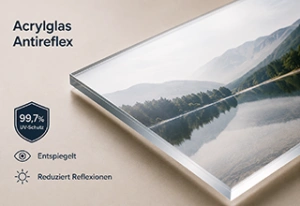
Acrylic glass
Antireflex
Perfect for rooms with strong lighting or direct sunlight.
✓ 99.7% UV protection
✓ Single-sided anti-reflective
✓ Reduces distracting reflections
✓ 3.0 mm thickness
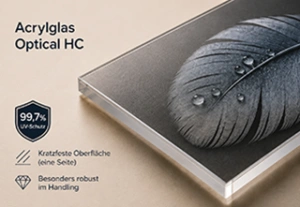
Acrylic glass
Optical HC
Ideal for professional applications
with higher stress.
✓ 99.7% UV protection
✓ Scratch-resistant surface (one side)
✓ Particularly robust in handling
✓ 3.0 mm thickness
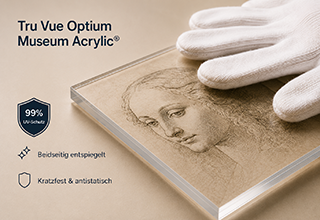
Tru View Optium
Museum Acrylic®
Premium solution for museums, collectors, and demanding exhibitions.
✓ 99% UV protection
✓ Double-sided anti-reflective
✓ Scratch-resistant & antistatic
✓ 3.0 mm thickness
Which factors are decisive when choosing acrylic glass?
Not every artwork places the same demands on the glazing. Depending on the location, lighting conditions, and value of the image, UV protection, anti-reflection, and surface hardness play different roles.

Location
The location influences the need for protection.
Sunlight and environmental influences can affect colors and materials in the long term.

Lighting conditions
Light is one of the most important aging factors.
UV radiation can cause colors to fade. High UV protection helps preserve artworks permanently.

Value & Sensitivity
Valuable works deserve special protection.
Originals and limited editions benefit from high-quality UV protection and anti-reflective surfaces.

Material properties
Not every acrylic glass offers the same properties.
UV protection, anti-reflection, scratch resistance, and antistatic properties influence protection and image display.
Which acrylic glass suits your project?
Tip: For living spaces, acrylic glass UV 90 is usually the right choice. For distracting reflections, Antireflex is recommended, while Optical HC impresses with its scratch-resistant surface. For museums and high-quality originals, Tru Vue Optium Museum Acrylic® offers the highest protection and presentation quality.
| Variant | UV protection | Anti-reflection | Surface | Recommended for |
|---|---|---|---|---|
| UV 90 | 90 % | Standard | Living spaces & large formats | |
| Antireflex | 99,7 % | Single-sided | Standard | Bright rooms |
| Optical HC | 99,7 % | Scratch-resistant | Photography & commercial | |
| Optium Museum Acrylic® | 99 % | Double-sided | Scratch-resistant | Museums & collections |
Why acrylic glass instead of float glass?
The advantages at a glance
✓ Up to 50% lighter than glass
✓ Shatter-resistant and safer for shipping
✓ High UV protection against fading
✓ Ideal for large picture frames
✓ Particularly suitable for public areas and exhibitions
Acrylic glass is particularly suitable for high-traffic areas, exhibitions, businesses, and large-format picture frames.

Important note on electrostatic charge
Acrylic glass can become electrostatically charged.
For charcoal drawings, pastel works, or very loose pigment works, we recommend real glass, as pigment particles can become detached due to static charge.
Care & Handling
- Completely remove protective films from both sides before framing
- Use soft cloths for cleaning
- Antistatic acrylic glass cleaners recommended
- For Optical HC, insert with the scratch-resistant side facing outwards
Frequently Asked Questions about Acrylic Glass
Answers to the most important questions about Passepartouts, picture frames, shipping, and our configurator.
Acrylic glass is lighter, shatterproof, and offers high UV protection depending on the version. Float glass is heavier and less electrostatic.
For museums, we recommend anti-reflective premium versions such as Optium Museum Acrylic®.
Standard acrylic glass is more sensitive to scratches than glass. Optical HC and Optium Museum feature scratch-resistant surfaces.
Depending on the version, between 90% and 99.7%.
Due to possible electrostatic charging, real glass is recommended here.
High-quality acrylic glass remains clear and color-stable for many years. Modern acrylic glass for picture framing does not yellow under normal use.
Acrylic glass is significantly more impact-resistant than conventional glass. It is therefore particularly suitable for large picture frames, public areas, and shipping.
Yes. Due to its low weight and shatterproof properties, acrylic glass is particularly suitable for large-format picture frames.
Yes. Acrylic glass weighs about half as much as conventional float glass, making transport, assembly, and wall mounting easier.
Yes. Depending on the version, anti-reflective options such as Acrylic Glass Antireflex or Tru Vue Optium Museum Acrylic® are available.
Use soft microfiber cloths and suitable acrylic glass cleaners. Aggressive or alcohol-based cleaning agents should be avoided.
For high-quality photographs, we recommend acrylic glass with high UV protection, such as UV 100, Antireflex, or Tru Vue Optium Museum Acrylic®.